I have started twelve companies across twenty-five years. Some of them made people rich. One of them evaporated in a single season. If you asked me to summarize everything I have learned in a sentence, I would hand you a cube and say: you cannot control the roll, only the throw and the next decision.
The throw is yours
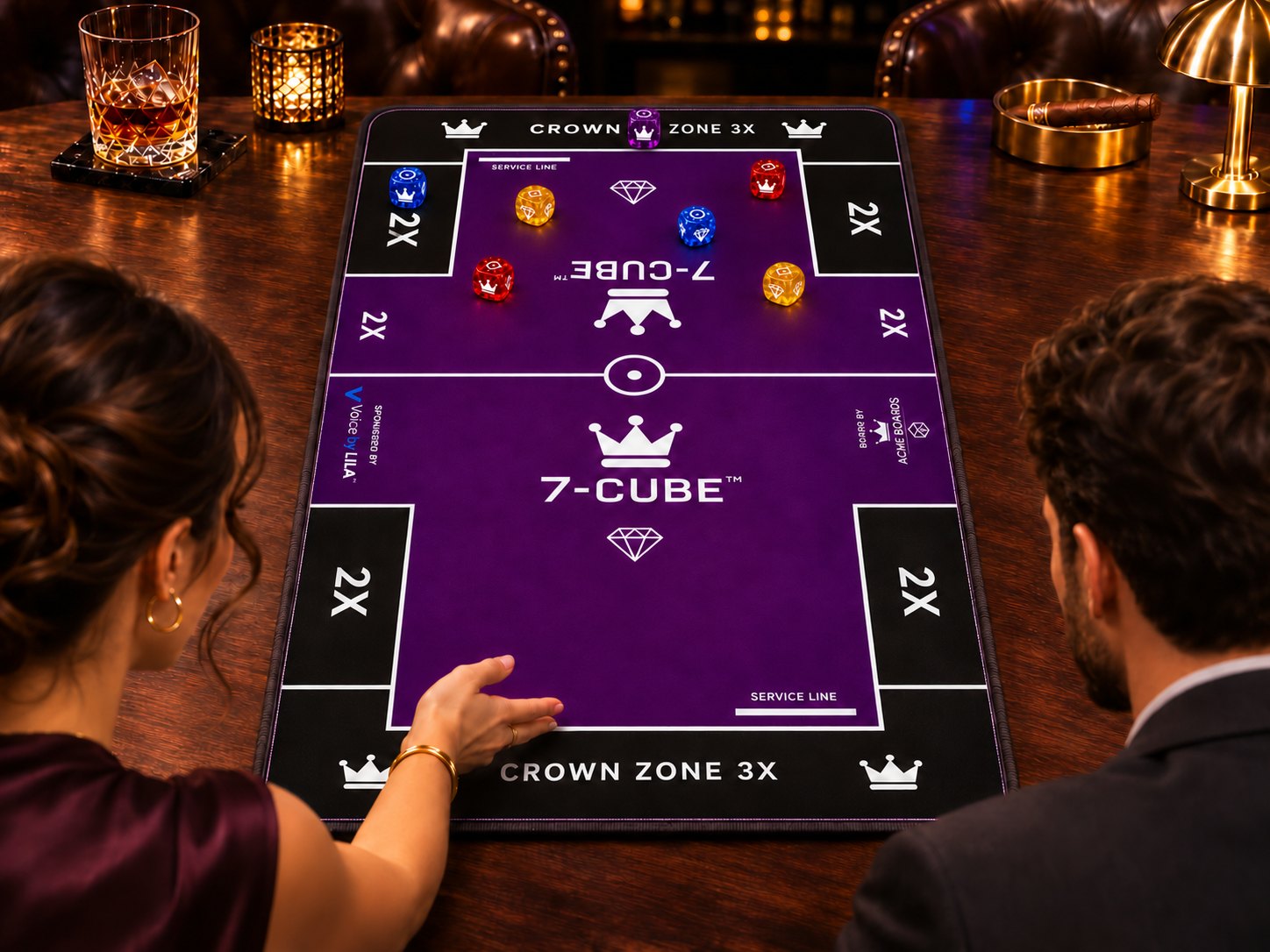
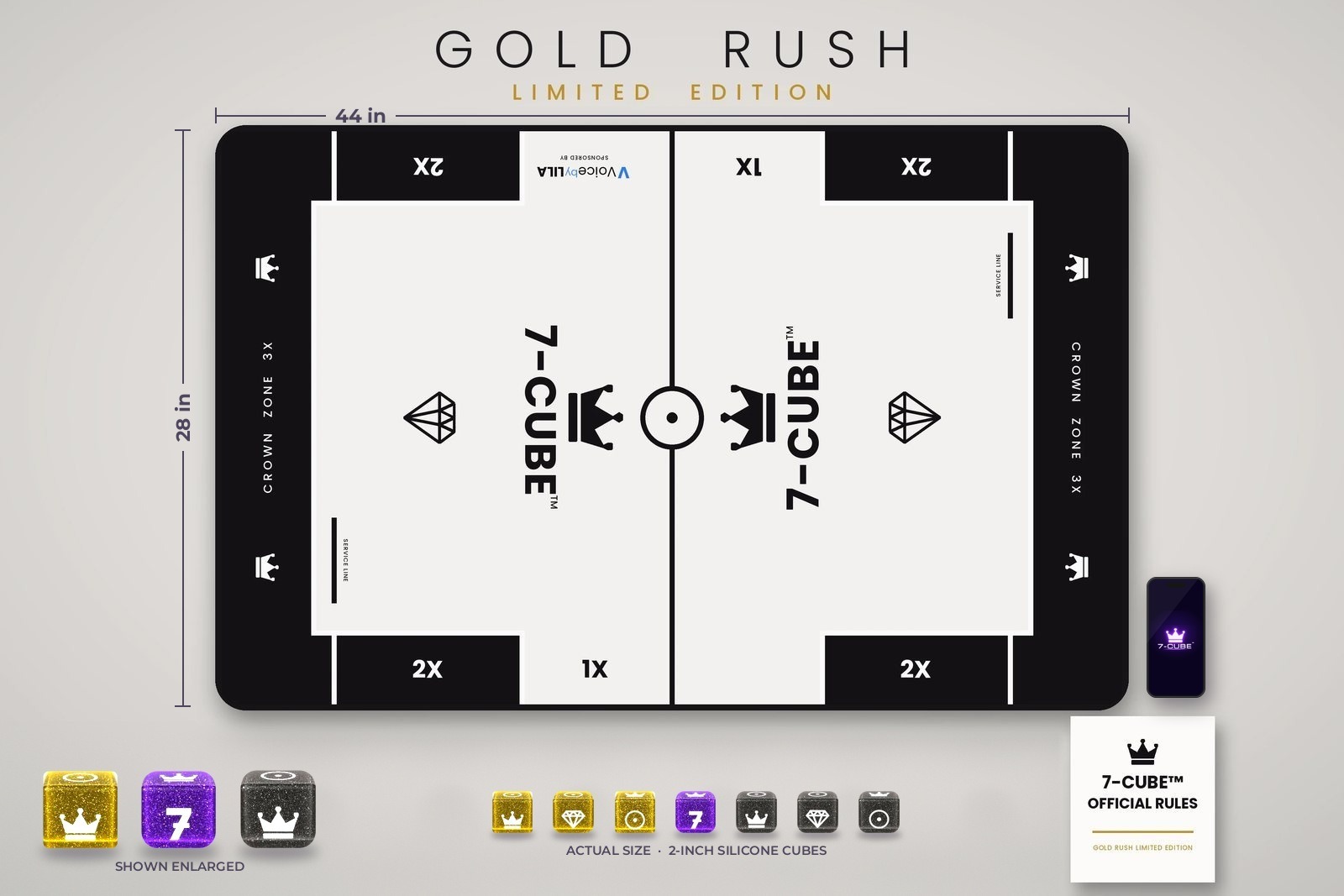
In 7-CUBE™, every turn begins the same way. You choose where to stand, how hard to throw, and which zone to aim for. Those choices are entirely yours. Then the cubes leave your hand, and physics takes over. They tumble, collide and settle wherever the felt and the angles decide.
Business works identically. You choose the market, the people, the price and the timing. Then the economy, the weather, a competitor and a thousand strangers take their turns. Founders who blur those two phases suffer twice: once from bad luck, and again from blaming themselves for it.
A good roll
In the late 1990s I started a wireless company in Boulder, Colorado, with five thousand dollars. By its fifth year it was generating more than twenty-five million dollars in annual revenue with about twenty employees. Three of the people who worked there became millionaires, two of whom started in the warehouse.
It would be flattering to call that pure skill. It was not. We worked relentlessly, but we were also standing in the right place when an entire industry tilted toward us. The honest lesson of a good roll is humility: notice which part was the throw and which part was the table.
The honest lesson of a good roll is humility. The honest lesson of a bad one is the same.
A bad roll
A few years later I built a real-estate company from a single ten-thousand-dollar renovation into a portfolio worth more than twenty million dollars: office buildings, luxury homes, apartment communities. Then 2008 arrived. The market did not decline so much as disappear. No amount of effort changed where those cubes landed.
That is the moment every founder eventually faces, and it is the moment that defines the next decade. You can spend years relitigating the roll. Or you can gather what is left on the table and take your next turn.
The next decision
In 7-CUBE™, the cubes you score determine how many you get to roll next. A strong turn keeps your hand full. A weak one leaves you with fewer cubes and a harder road. That rule exists because it mirrors something true: setbacks compound, and so does momentum. The player who makes a calm, sensible decision after a bad roll usually beats the player who makes a brilliant one after a good roll.
A free cube
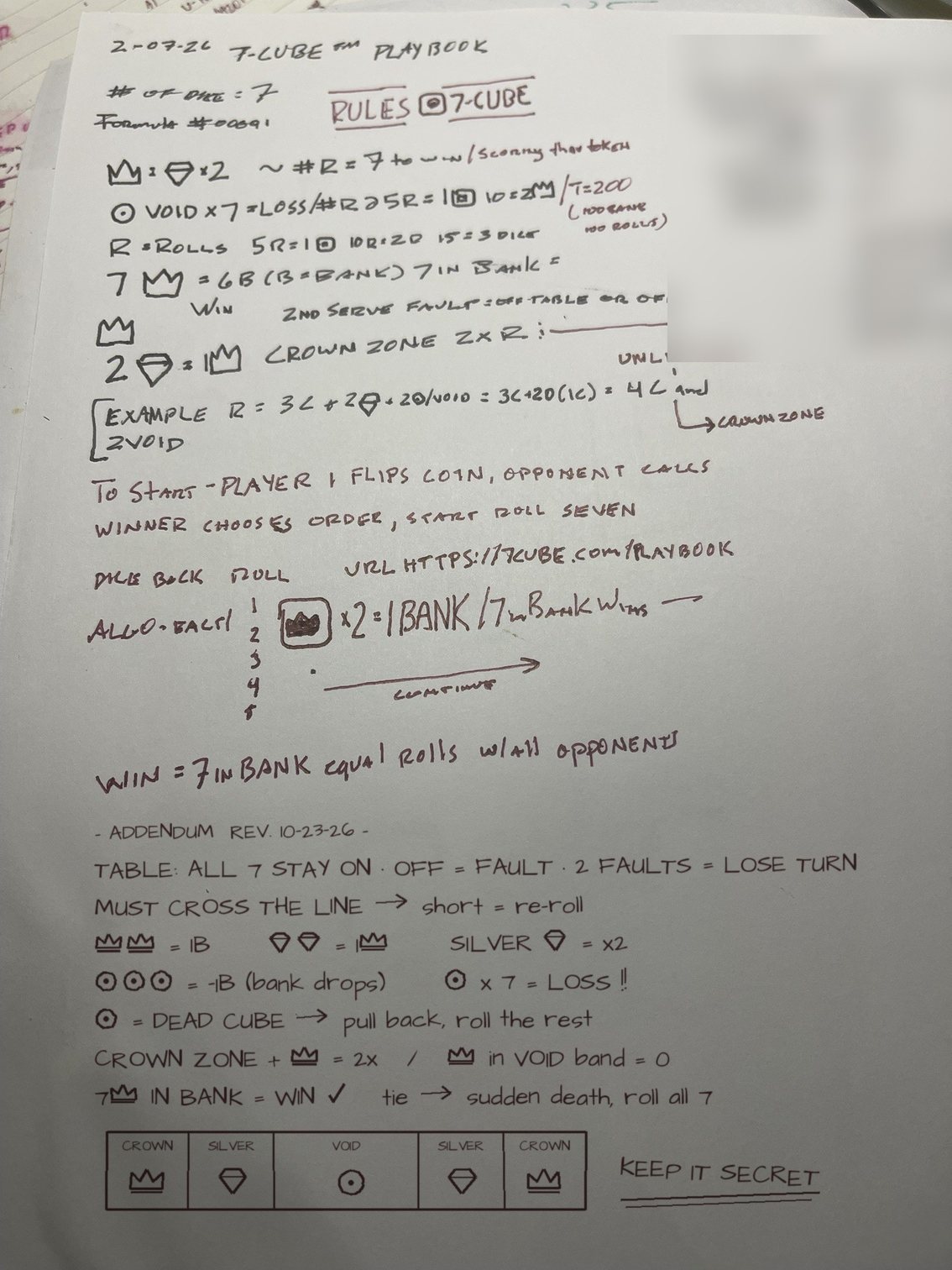
The game itself began with chance. Early one morning in January 2026, on a coffee run before sunrise, I was handed a free promotional foam cube. Most people would have tossed it in a drawer. I rolled it across a table, then rolled it again, and started keeping score. Together with my brother Stephen, a physician, we turned that cube into a set of rules, then a mat, then a game.
That cube was luck. Everything after it was a series of throws: the rules, the mat, the factories, the late nights, the decision to build in public. We still cannot control how the market will receive it. We can control how well we throw.