Every household owns at least one object built on a contradiction. It lives in a closet, usually beneath the holiday lights, and it comes out once or twice a year. It is the table game. We bring it out to relax, and within twenty minutes someone is reading the rules aloud in the tone of a courtroom clerk.
Table games are among the oldest artifacts of civilization, and among the least examined. That is a shame, because they are full of irony. Look closely and almost every game says one thing on the box and teaches something else at the table.
Irony one: the games of chance are games of skill
We sort games into two drawers. Chess goes in the skill drawer. Anything with dice goes in the luck drawer. It is a tidy taxonomy, and it collapses the moment you keep score for long enough.
A single roll is a coin toss. A season of rolls is a résumé. Backgammon players with decades of practice beat novices with numbing regularity, despite the fact that every move begins with dice. Poker, the archetypal game of fortune, produces the same handful of names at the final table year after year. In 2012 a federal judge in Brooklyn went so far as to write that poker is predominantly a game of skill. Chance, it turns out, is not the opposite of skill. It is the fog through which skill becomes visible.
Luck decides a roll. Skill decides a season.
Pure-skill games carry the reverse irony. Chess has no dice at all, yet ask a club player why they lost and you will hear a remarkably superstitious vocabulary: a lucky tactic, an unlucky blunder, a fortunate time scramble. Humans cannot help narrating randomness, even where none exists.
Irony two: Monopoly was a warning
The most famous property game in the world began as a critique of property games. Its ancestor, The Landlord’s Game, was patented by Lizzie Magie in 1904. She designed it to demonstrate how the concentration of land in a few hands impoverishes everyone else. One set of rules rewarded cooperation. The other rewarded crushing your opponents.
The public chose crushing. A century later, families who would never describe themselves as robber barons spend their holidays bankrupting one another with genuine relish. The lesson was intact. We simply read it backwards.
Irony three: the oldest game was a sermon
Snakes and Ladders came to the West from India, where earlier versions served as a lesson in morality. Ladders stood for virtues. Snakes stood for vices. The board was a sermon you could play.
Somewhere on its journey to the nursery, the theology fell off. Today the game teaches a different doctrine: that the universe is arbitrary, that your younger sibling is mysteriously favored, and that the square just before the finish is always guarded by the longest snake. Perhaps that is the more honest lesson.
Irony four: the more we connect, the more we want a table
Screens promised to replace the game closet. Instead, something curious happened. As our devices grew more capable, sales of physical games kept finding new audiences, and board game cafés appeared in cities that had never heard of them. People did not want less screen time in the abstract. They wanted a reason to sit across from each other.
A table game is one of the few modern rituals that requires eye contact. You cannot scroll past your opponent. You must watch them roll, wait while they deliberate, and endure their gloating in person. It is friction, and friction is precisely the point.
Irony five: we play to escape, and end up revealing ourselves
We sit down to a game to get away from real life. Then the game shows us exactly who we are. The cautious player banks every point. The gambler goes long for the triple and misses. The diplomat negotiates, the strategist calculates, and the sore loser leaves early to “check on something in the kitchen.” Ten minutes at a table can reveal more character than a year of polite dinners.
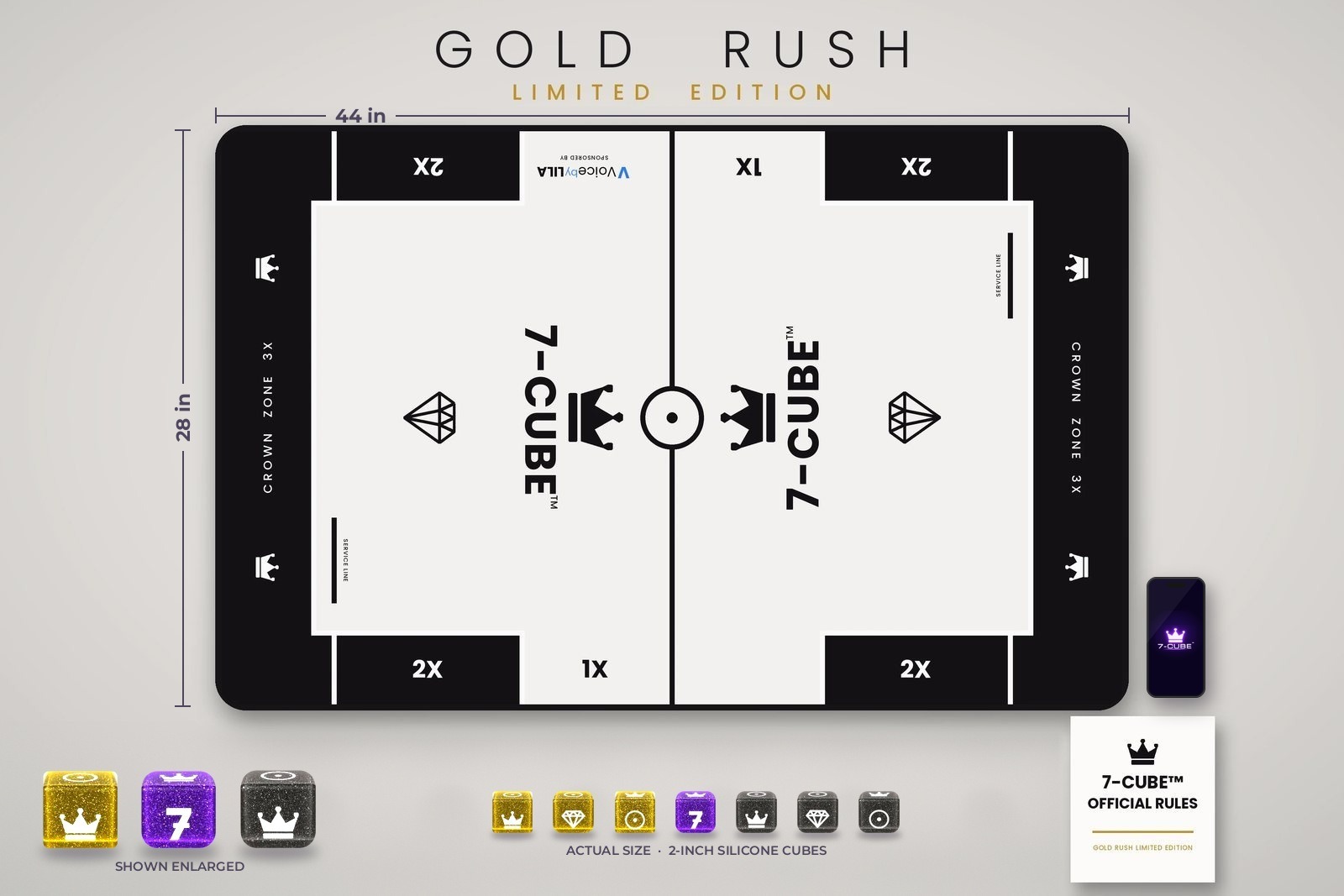
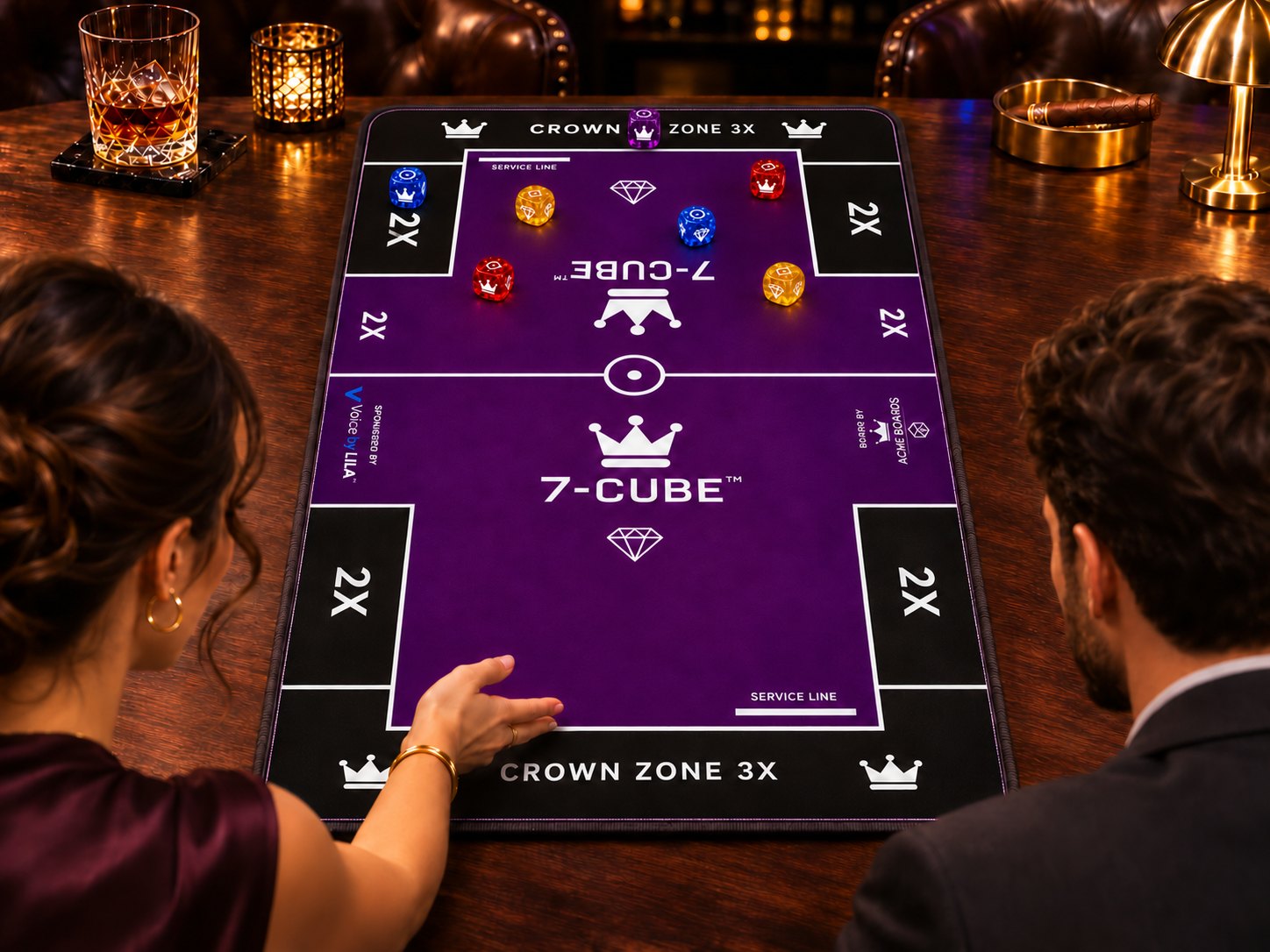
That is why we built 7-CUBE™ the way we did. Seven soft cubes, one mat, and a single honest question on every turn: do you take the safe score or reach for the Crown Zone? The cubes supply the chance. Everything else is you.
Test the first irony yourself. Play five rounds of 7-CUBE™ Online and watch how quickly “luck” starts to look like a pattern.
Play free, no sign-up