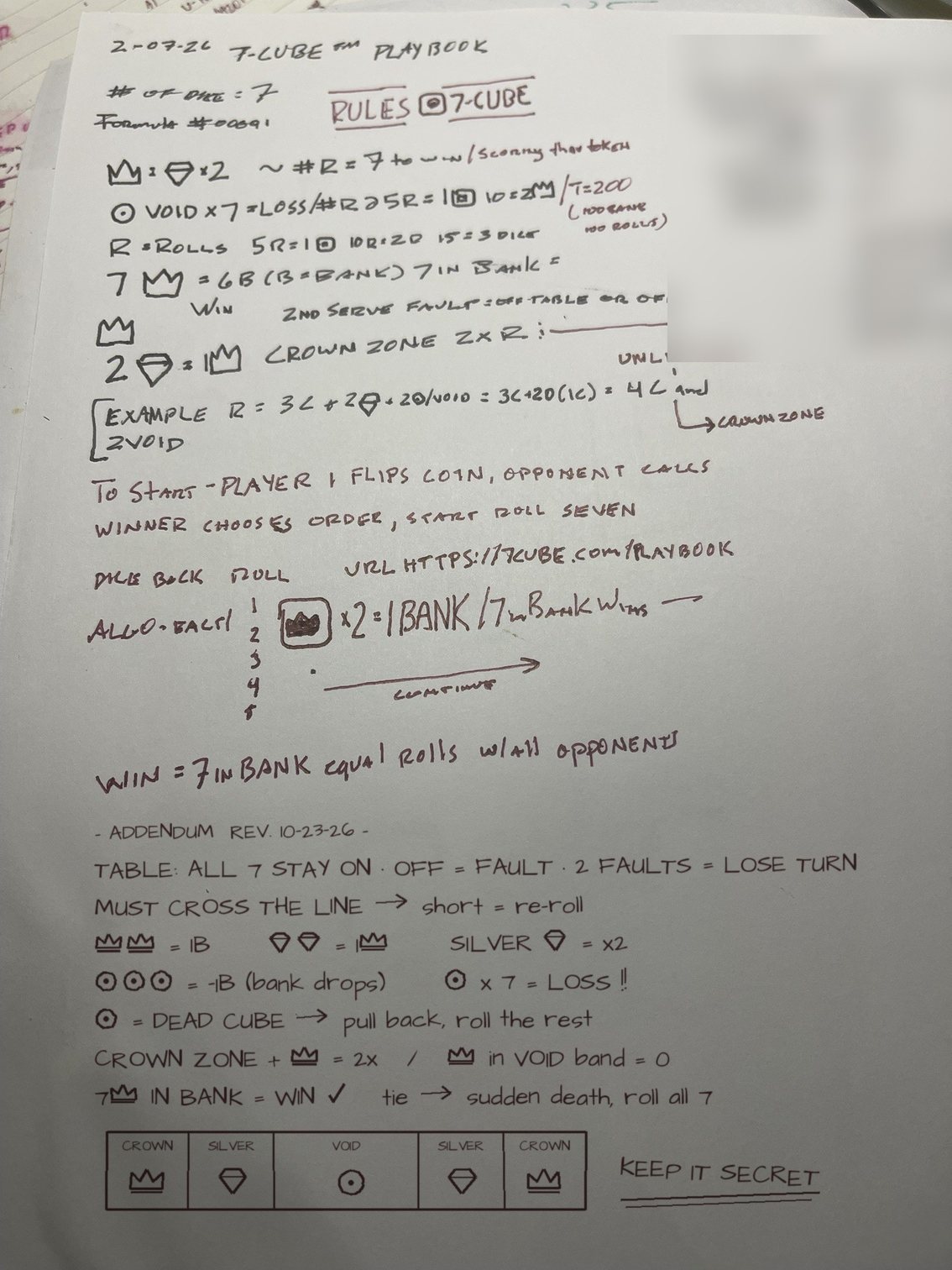
People ask us a reasonable question. A cube has six faces. Why is the game called 7-CUBE™? The short answer is that there are seven cubes. The long answer is more interesting, because seven was hiding on every die long before we arrived.
The secret arithmetic of a die
Pick up any standard six-sided die and add the numbers on opposite faces. One and six. Two and five. Three and four. Every pair sums to seven. The die is a small cube engineered around a number it never displays. Seven is the invisible axis on which the whole object balances.
Roll two dice and seven appears again, this time as destiny. Of the thirty-six possible outcomes, six produce a seven, more than any other total. Craps, the casino’s most theatrical game, is built entirely on that quiet statistical fact.
Seven is the number every die is built around and never shows.
The number the mind can hold
In 1956 the psychologist George Miller published one of the most cited papers in his field, on what he called the magical number seven, plus or minus two. Its argument was that our short-term memory comfortably juggles about seven items before it starts dropping them. Later research has refined the figure, but the intuition endured. Seven is roughly the size of a thought.
That may explain why local telephone numbers settled at seven digits for so long, and why lists of seven feel complete while lists of nine feel like homework.
Calendars, colors and scales
The seven-day week traces back to ancient Mesopotamia, where astronomers tracked seven moving lights in the sky: the sun, the moon and the five planets visible to the naked eye. Each received a day. Many of our weekday names still carry their fingerprints.
Isaac Newton divided the rainbow into seven colors, partly so that the spectrum would rhyme with the seven notes of the musical scale. Indigo, the color most people cannot quite locate, owes its place in the lineup to that sense of harmony. Even physics, it seems, can be swayed by a good number.
The number people pick
Ask a room full of people to choose a number between one and ten, and seven turns up more often than any other in informal surveys. It feels random. It is neither too round nor too obvious, and it sits slightly off-center, which is exactly where human intuition thinks chance should live. Our favorite “random” number is the least random choice we make.
So, why seven cubes?
Seven is where the game found its balance. Fewer cubes and a single bad throw can end a turn before it begins. More, and the mat turns into a traffic jam. Seven gives you enough cubes for chaos and few enough that every roll matters.
We like to think the die would approve. It has been carrying seven around in secret for three thousand years. We simply put it on the outside of the box.
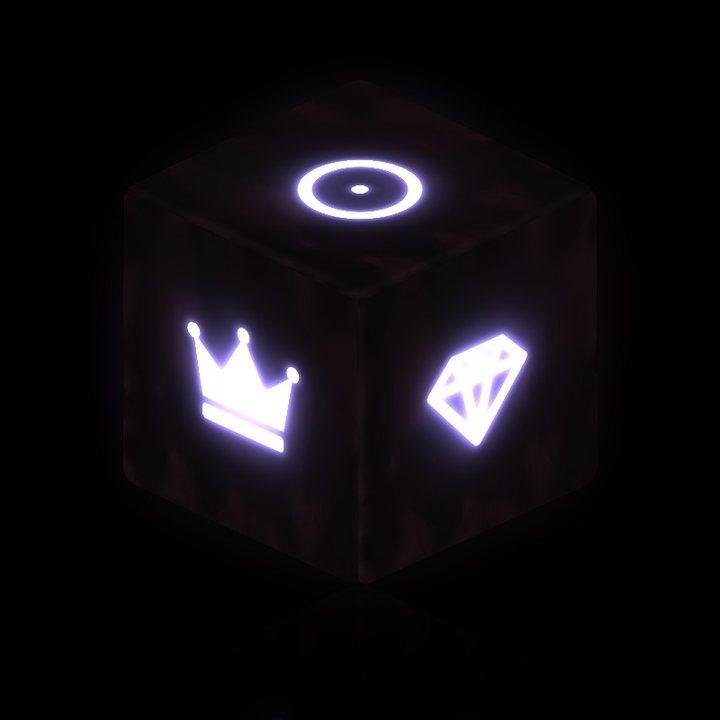
Seven cubes, three symbols, one Bank to fill. See whether seven feels lucky to you.
Play 7-CUBE™ Online