Few phrases have been repeated as often, or with as little effect, as “think outside the box.” It hangs on conference-room walls and closes keynote speeches. It is offered as liberation. In practice, it tends to produce paralysis, because a blank page with no edges is not freedom. It is fog.
The historical record suggests something more counterintuitive. Many of humanity’s most memorable creations came from people who deliberately built a smaller box, climbed inside, and closed the lid.
Seventeen syllables
A haiku allows seventeen syllables in a five, seven, five pattern. That is barely enough room to describe the weather. Yet the form has survived for centuries precisely because it forbids explanation. The poet has space for one image and one turn. Everything else must be implied, and implication is where the reader’s imagination does its finest work.
The sonnet does the same with fourteen lines and a strict rhyme scheme. Shakespeare wrote more than one hundred and fifty of them. He did not find the walls confining. He used them as a resonating chamber.
Fifty words and a wager
Around 1960 the publisher Bennett Cerf bet Dr. Seuss that he could not write a book using only fifty different words. The result was Green Eggs and Ham, one of the best-selling children’s books ever written. The constraint did not limit the book. It became the book. Its relentless, delightful repetition exists because there was nothing else to reach for.
A blank page has no edges. That is why it is so hard to begin.
Small screens, sharp ideas
When an early social network capped posts at 140 characters, critics predicted shallow chatter. Some of that arrived. So did an entirely new genre of compressed wit, in which the art lay in what you could cut. The limit trained millions of people to edit, which is the least glamorous and most important creative skill there is.
Why constraints work
A constraint does three things at once. It eliminates choices, which spares your energy for the choices that remain. It creates a problem, and minds are far better at solving problems than at summoning inspiration. And it gives the audience a frame, so they can appreciate the ingenuity of what happened inside it.
The box we built
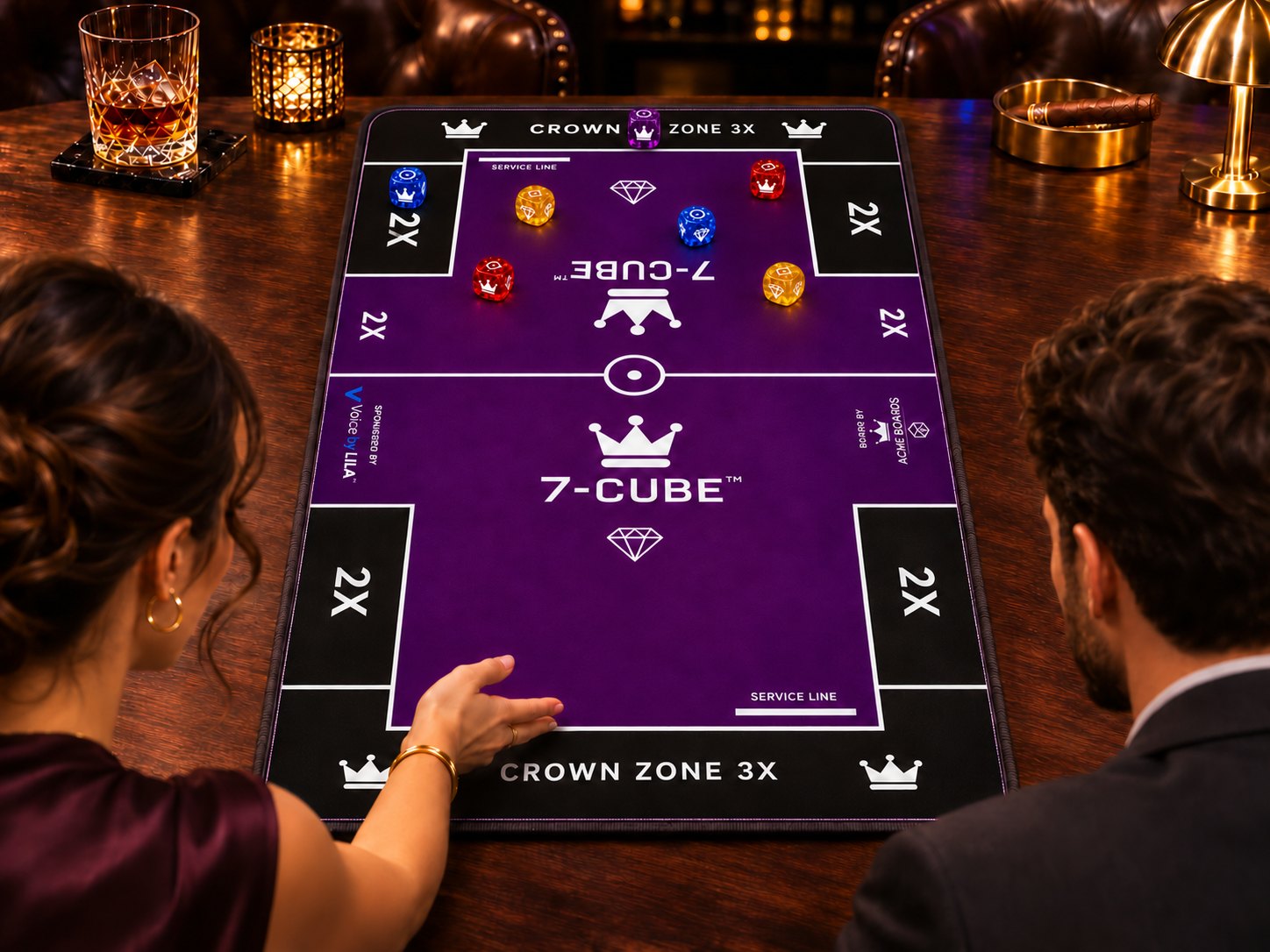
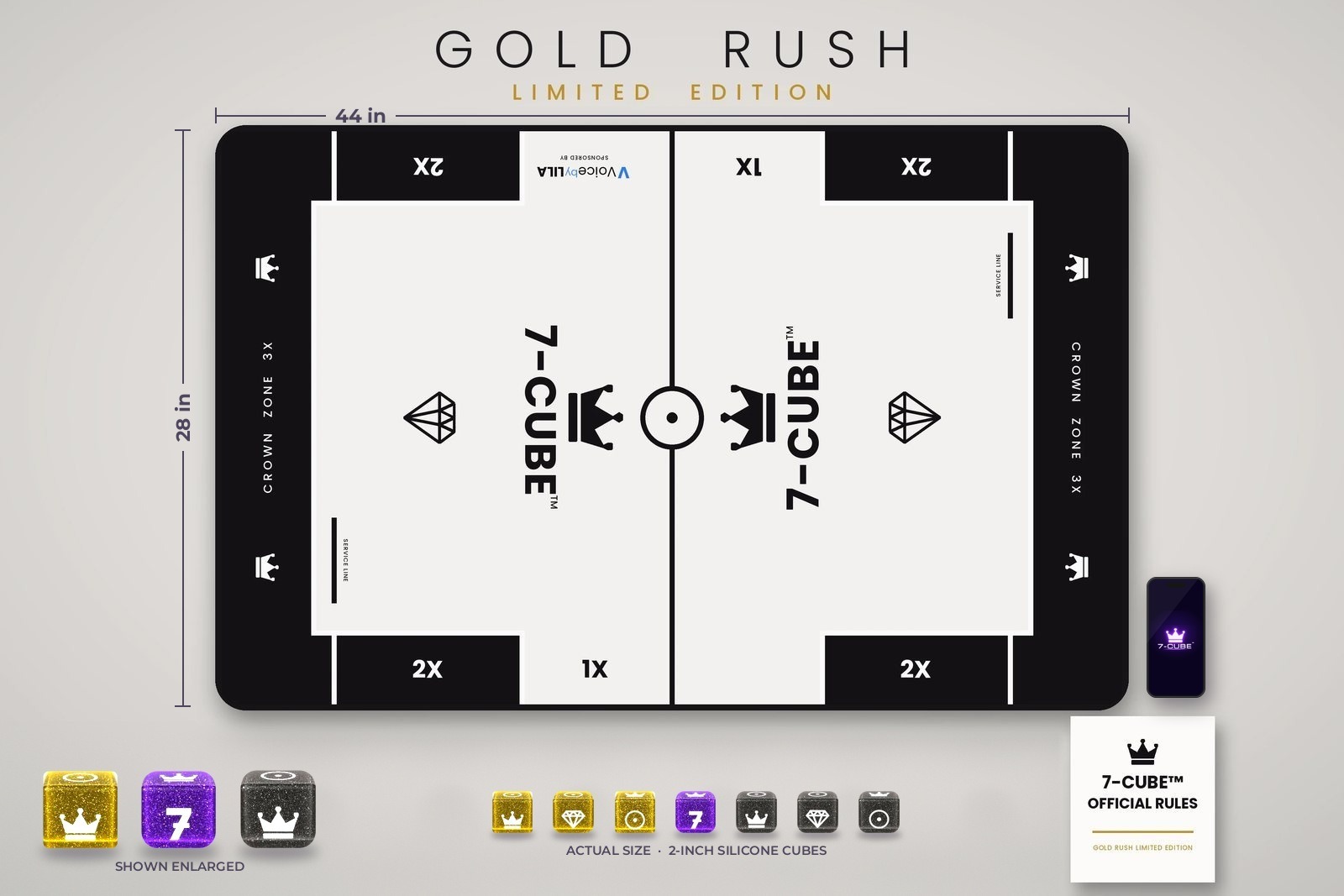
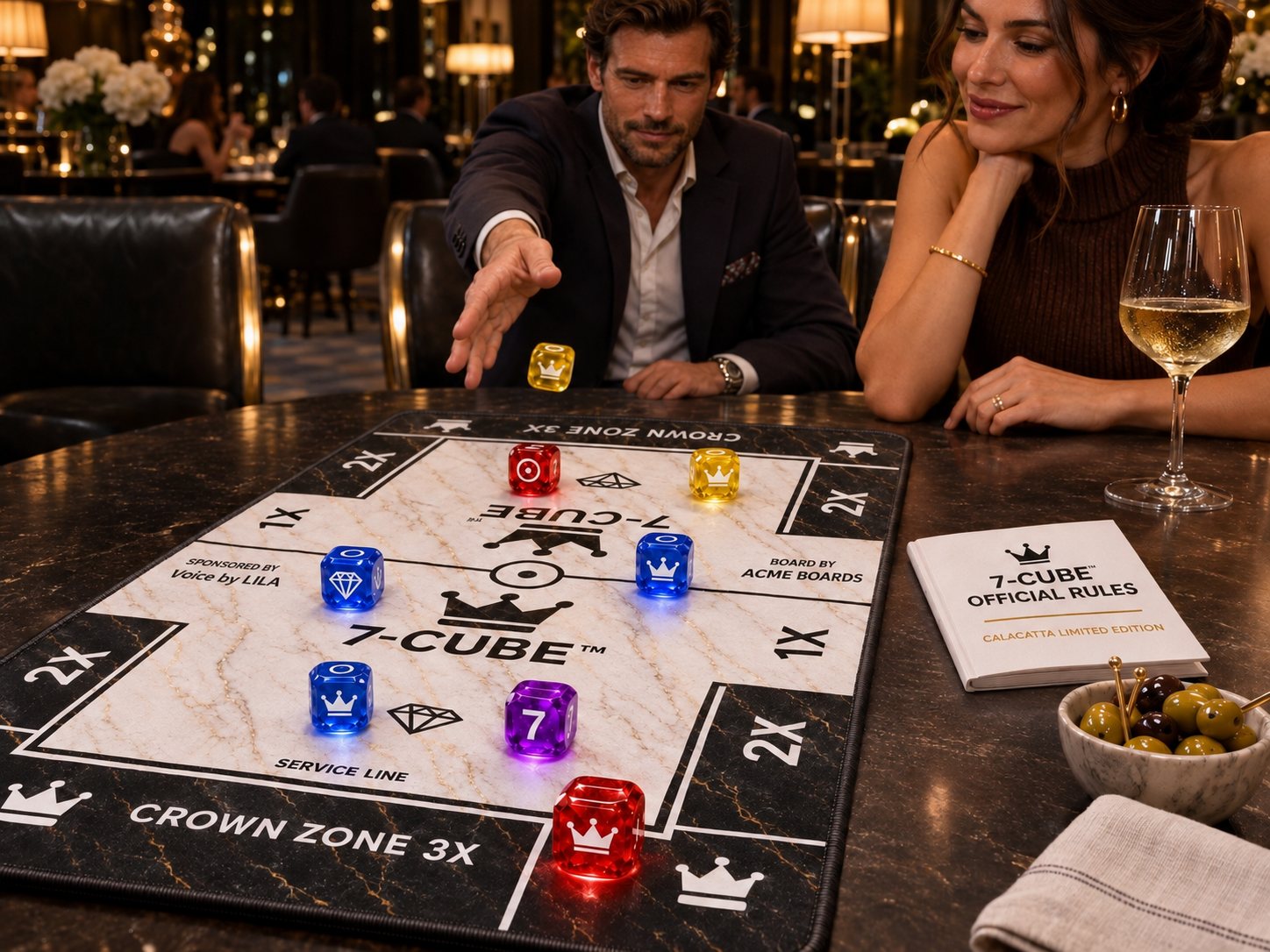
7-CUBE™ is an exercise in this principle. Seven cubes. Three symbols. One mat, 44 by 28 inches, with a Crown Zone at each end that most throws miss. We could have added cards, timers, special powers and a hundred-page manual. We chose subtraction instead, because every rule you add is a rule someone has to explain before anyone gets to throw.
So here is a small piece of contrarian advice for your next project. Do not think outside the box. Find a box worth thinking inside, make it a little too small, and see what you invent to fit.
Seven cubes and one mat. See how much strategy fits inside a very small box.
Play free