Watch a child on a playground and you will see something adults rarely permit themselves: activity with no purpose beyond itself. No metrics, no outcome, no résumé line. Just a game invented on the spot and abandoned when it stops being fun.
Somewhere between the first report card and the first performance review, most of us stop doing that. Play becomes something we schedule, monetize or feel faintly guilty about. That shift may be one of the quietest losses of adult life.
Older than culture
In 1938 the Dutch historian Johan Huizinga published Homo Ludens, “Man the Player.” His provocative thesis was that play is older than culture itself. Animals played long before humans built cities, and many of our most serious institutions, from law courts to sport to ritual, carry the structure of games: rules, roles, a bounded space and a contest whose outcome is uncertain.
If Huizinga was right, play is not a break from civilization. It is one of its foundations.
The opposite of play
The psychiatrist Stuart Brown spent decades studying play and founded the National Institute for Play. In his interviews with thousands of people, he found that a sustained absence of play tended to travel alongside rigidity, joylessness and diminished resilience. The play scholar Brian Sutton-Smith put it more bluntly: the opposite of play is not work, it is depression.
The opposite of play is not work. It is depression.Brian Sutton-Smith
Neither man argued that adults should abandon responsibility. Their point was subtler. Play is how mammals rehearse uncertainty in a safe container. It teaches flexibility, cooperation, and the ability to lose gracefully and try again. Those are not childish skills. They are the precise skills adult life demands most.
Why we stop
Adults rarely decide to stop playing. It erodes. Time fragments. Screens offer stimulation that resembles play but lacks its essential ingredients: other people in the same room, a physical object in the hand, and a shared outcome nobody can predict. Passive entertainment entertains. Play involves.
There is also a quieter barrier: self-consciousness. Play requires the willingness to look slightly foolish, to care about something that does not matter, in front of people whose opinion does. Children have not yet learned to be embarrassed. Adults have learned too well.
How to start again
- Lower the stakes. Choose games that take minutes, not hours. The goal is a habit, not an event.
- Make it physical. Something to hold, throw or move engages the body and settles the mind in a way a screen cannot.
- Invite the unlikely player. The colleague who never comes to happy hour, the parent who “doesn’t play games.” They are often the most competitive person at the table within ten minutes.
- Keep score, lightly. A little competition creates stakes. A lot of competition creates spreadsheets.
Back to the table
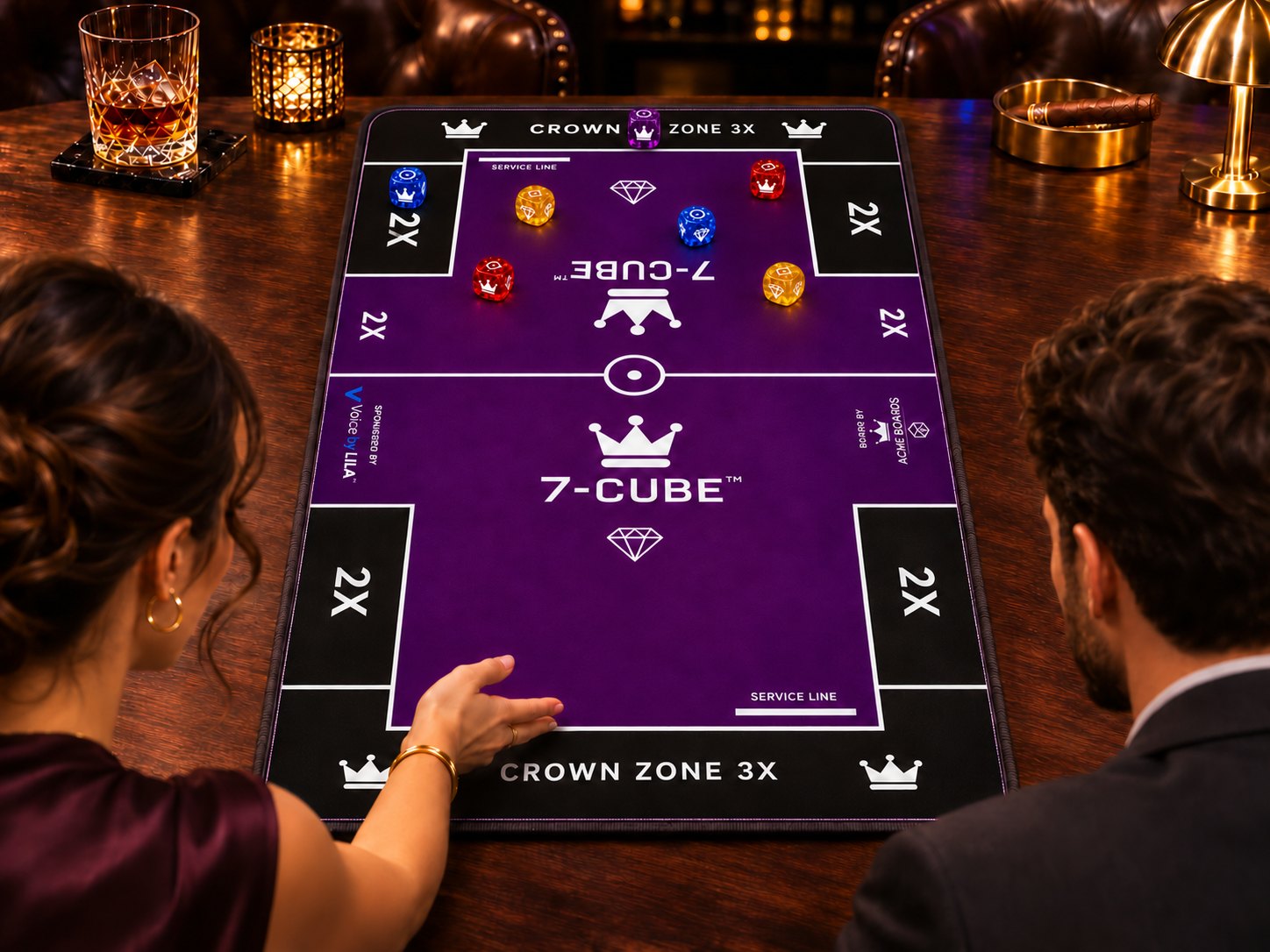
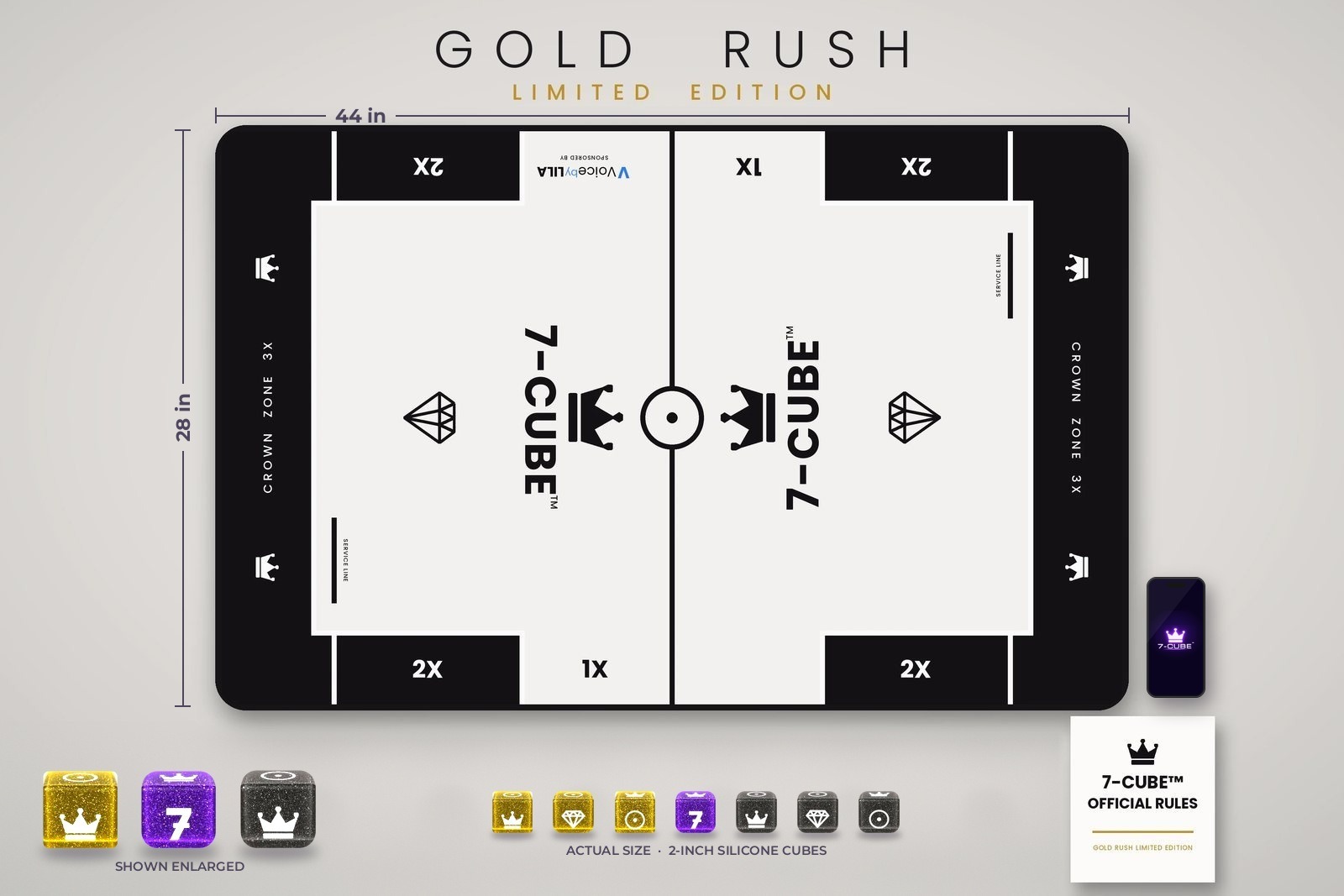
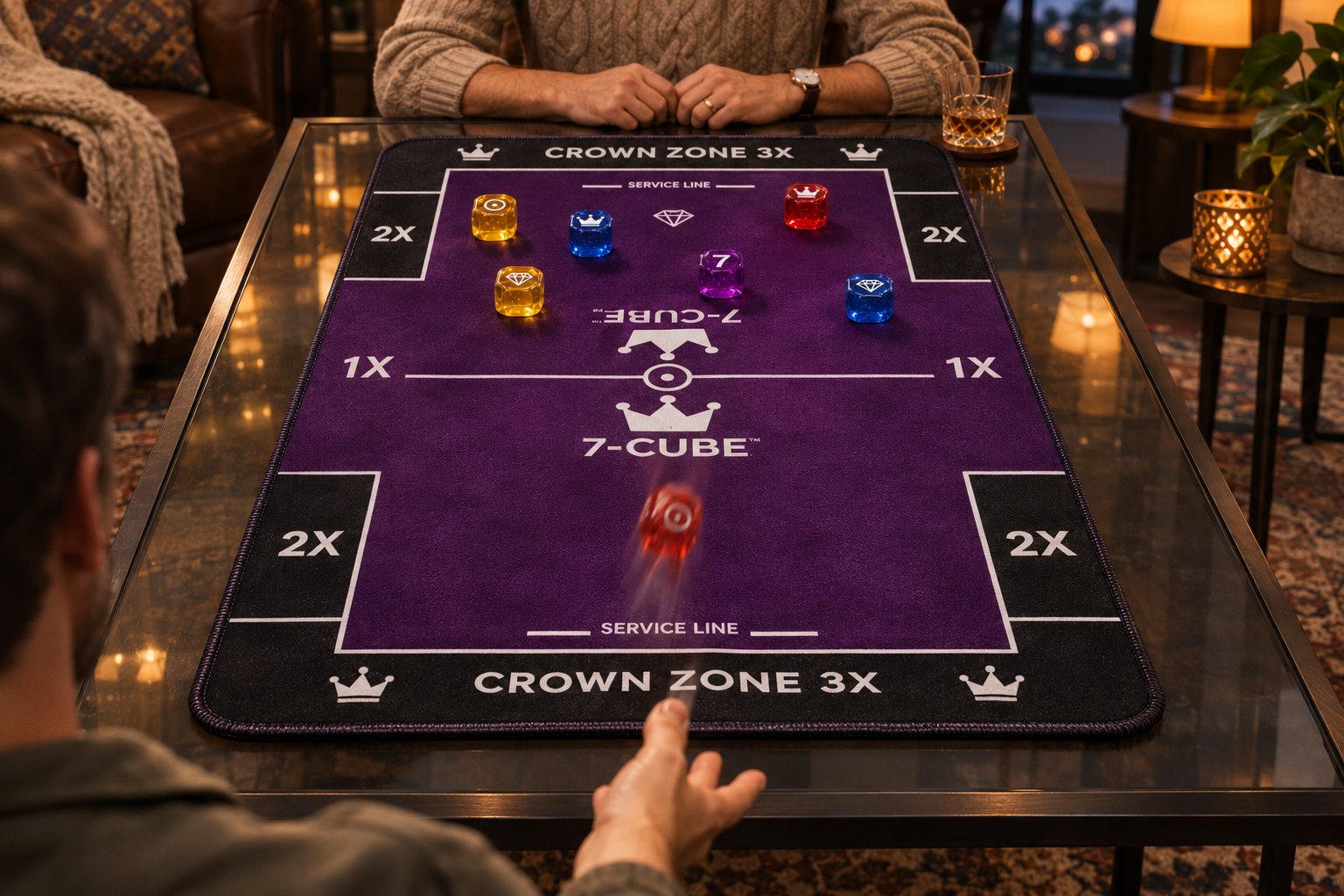
We designed 7-CUBE™ for exactly this gap. The cubes are soft enough to squeeze while you wait your turn. A game can be learned in five minutes. A seven-year-old can beat a CEO. It is an excuse, if you need one, to spend twenty minutes doing something wonderfully unproductive with people you like.
No one ever looks back on their life and wishes they had played less.
Two minutes, no sign-up, nothing to win but bragging rights.
Play 7-CUBE™ Online